
In June 2023 I designed and facilitated a 5-day roadmap workshop for Skrill's Crypto team — pulling product, engineering, design, risk and marketing into one room (and one shared Miro board) to align on shared outcomes, constraints, and an understanding of user, business and tech needs, solution opportunities and actionable next steps. The output was the roadmap for the upcoming half-year, split between “Discovery” and “Dev-ready” items.
Before this workshop, “what should we build next” had a different answer depending on who you asked. Engineering had a technical-debt list, marketing had campaign ideas, risk had compliance concerns, product had its own backlog — each reasonable on its own, with no shared frame to weigh one against another. That's not a people problem, it's a structural one: without a shared goal and a shared way to measure progress against it, every roadmap conversation turns into people re-litigating their own priorities.
This is, structurally, why workshops exist where meetings fail: a normal meeting rewards whoever is loudest or most senior in the room. Structured facilitation flips that by having people write ideas down silently first, then vote as equals with the same number of dots each. Rank comes off the table; the goal and the data make the call instead. That's the philosophy this workshop ran on, five days in a row.
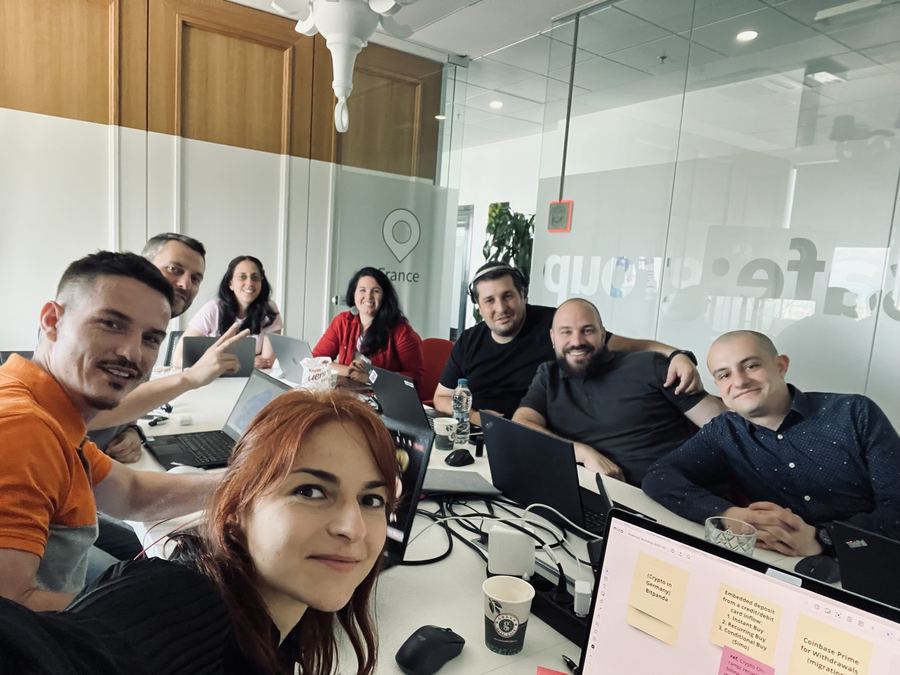
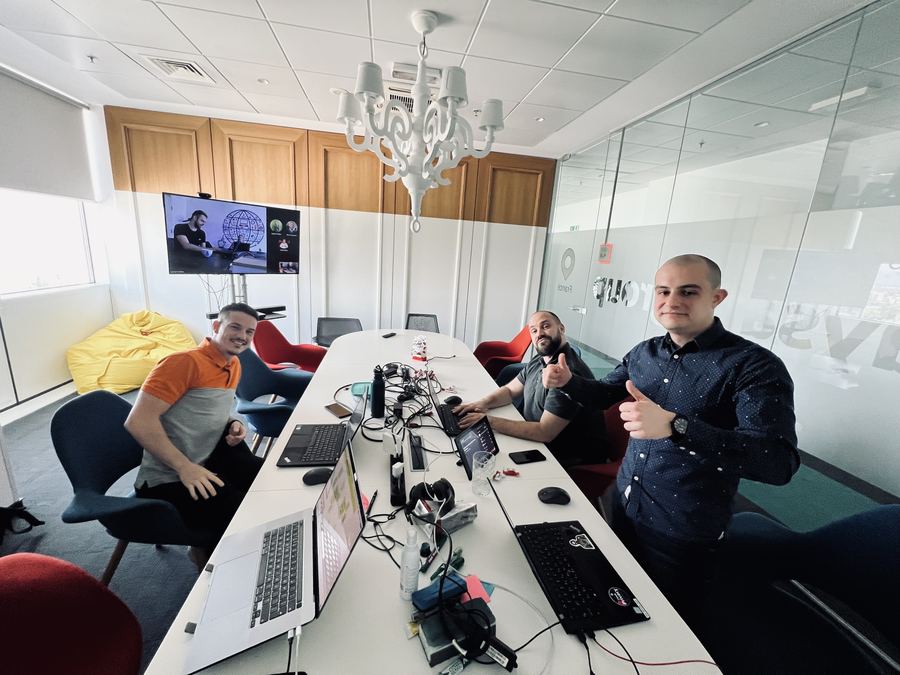
Preparation. Every participant got edit access to the Miro board ahead of time, with two exercises — “long-term goal” and “success metrics” — flagged to think about in advance so Day 1 didn't start from a blank page. The only two ground rules going in: no wrong answers, and keep the energy up by respecting the timeboxes.
Agenda breakdown. Five days, split into three arcs: Day 1 was pure alignment — setting the goal and how we'd measure it. Days 2–3 focused on the smaller initiatives that didn't need cross-partner integration. Days 4–5 shifted to the bigger, harder initiatives and to building an actual time-boxed roadmap out of everything the week had produced.

Frameworks used across the week: How-Might-We reframing, dot-voting, an impact/user-outcome matrix, an impact/effort matrix, hypothesis statements, a Sailboat retrospective, and a Discovery-Initiative canvas.


The turning point. It didn't arrive as one dramatic moment — it arrived on Day 2, gradually, as the dot-voting board filled up. The conversation stopped being “why my feature matters” and started being “does this move the goal and the metrics we all agreed to on Day 1.” Once the room had a shared yardstick, disagreement got a lot less personal.
Conflict resolution. The two prioritisation matrices — impact vs. user outcome, then impact vs. effort — did most of the conflict resolution for us. Nobody had to “win” an argument about whose initiative deserved a spot on the roadmap; the matrix made the case visually, and dot-voting meant every voice, regardless of seniority, carried the same weight.
The final deliverable is the swim-lane roadmap from Day 5 — every initiative, time-boxed and split across the teams and owners that would either build or do discovery, depending on the type of initiative.
Business impact. The roadmap this workshop produced became the basis for Crypto's H2 2023 planning, and its smaller initiatives are what turned into one of its main initiatives — the Crypto Dashboard redesign.
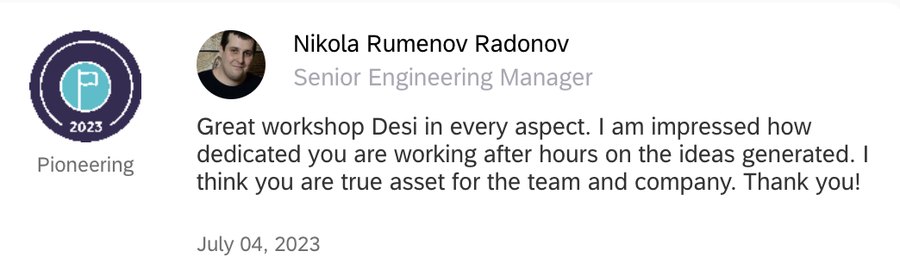
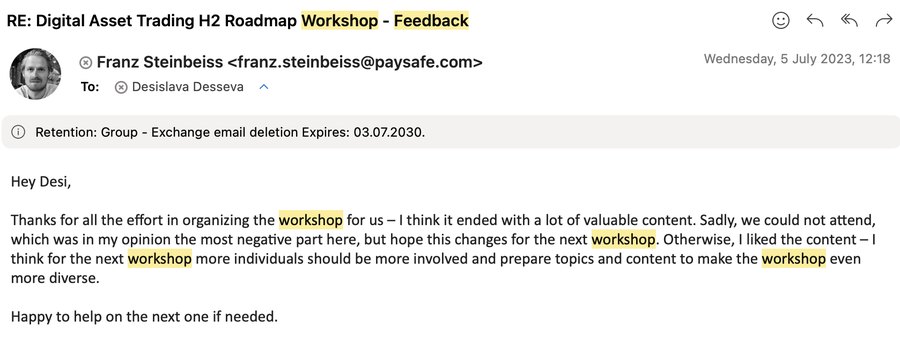
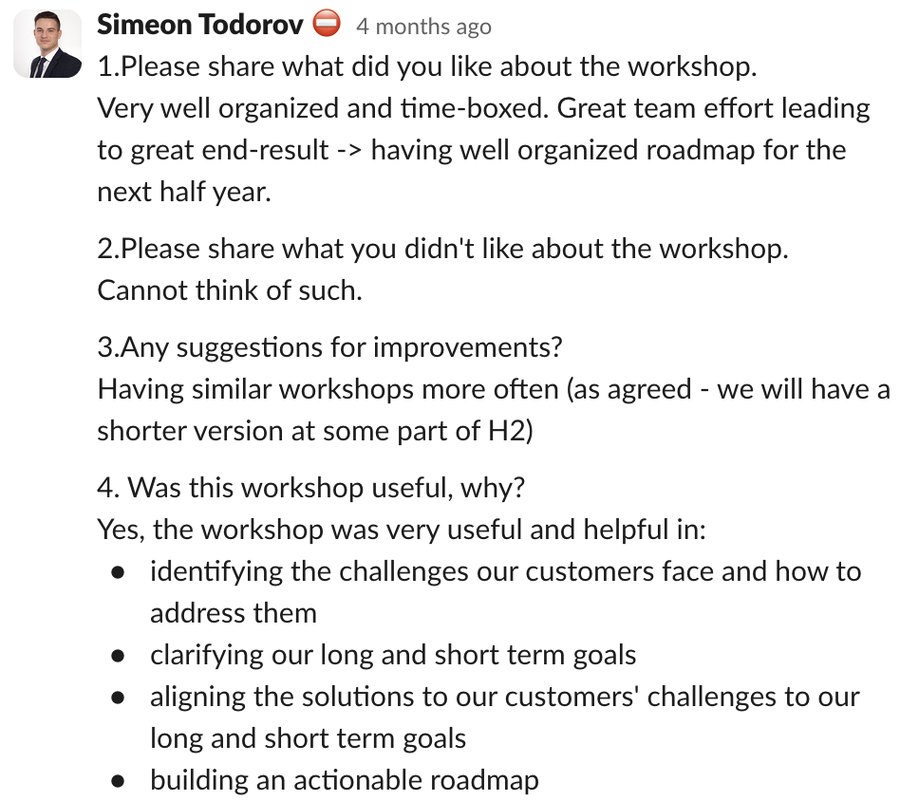
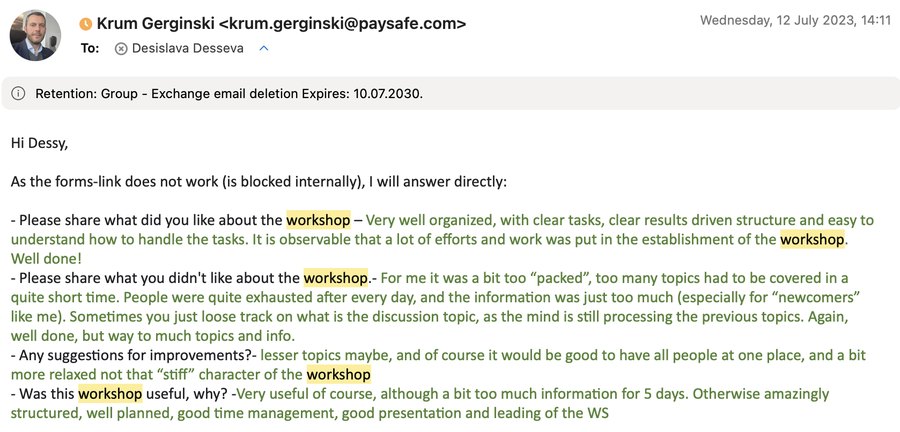
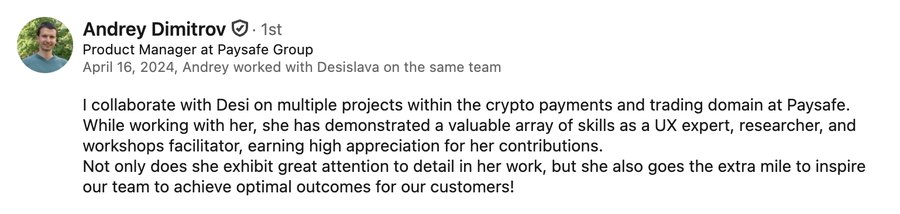
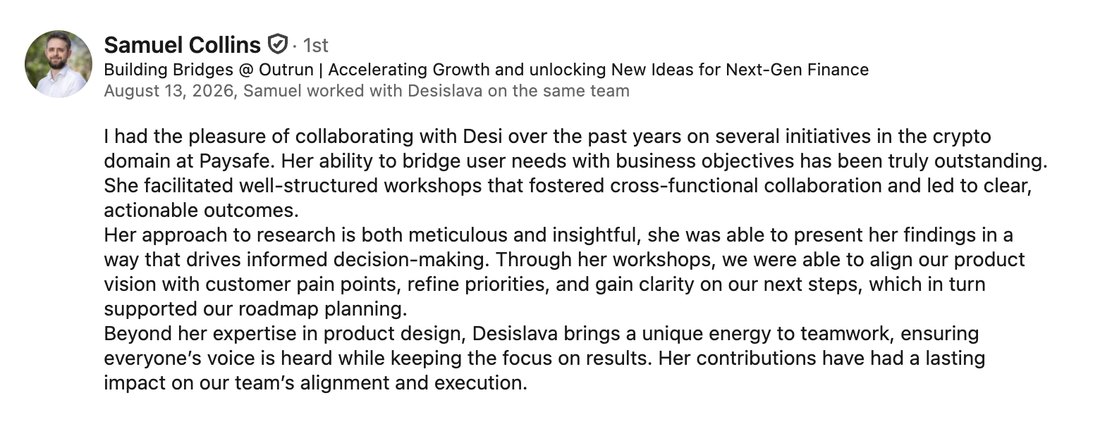
Overall, the feedback was strongly positive. Participants saw the roadmap workshop as well organised, clearly structured, well facilitated, and focused on producing useful outcomes.
The main opportunity for improvement was the workshop's intensity. One participant found the five-day agenda too packed, particularly for newcomers. Suggestions included:
Two case studies sit close to this one – the same conviction that alignment comes before execution, applied at different scales.