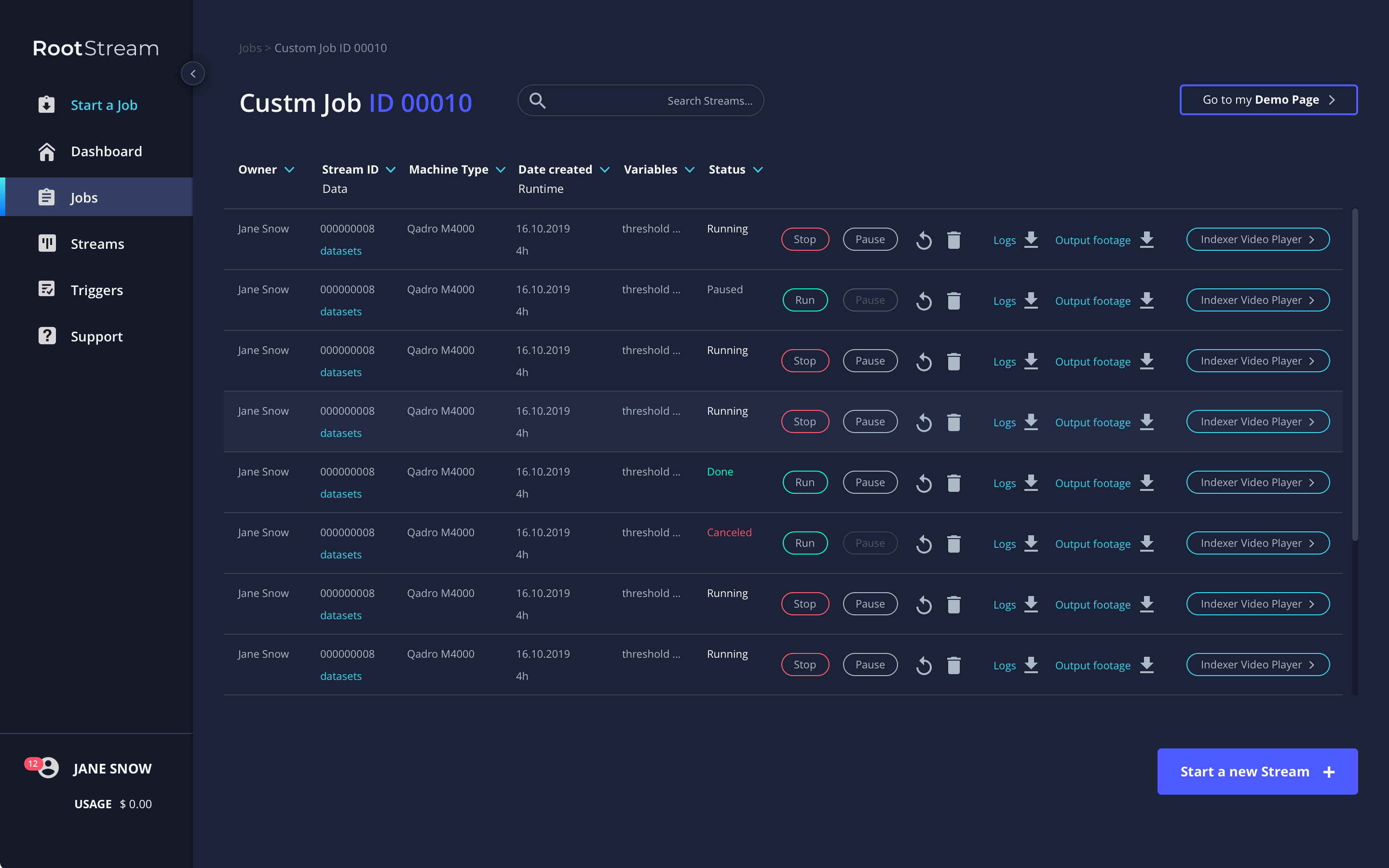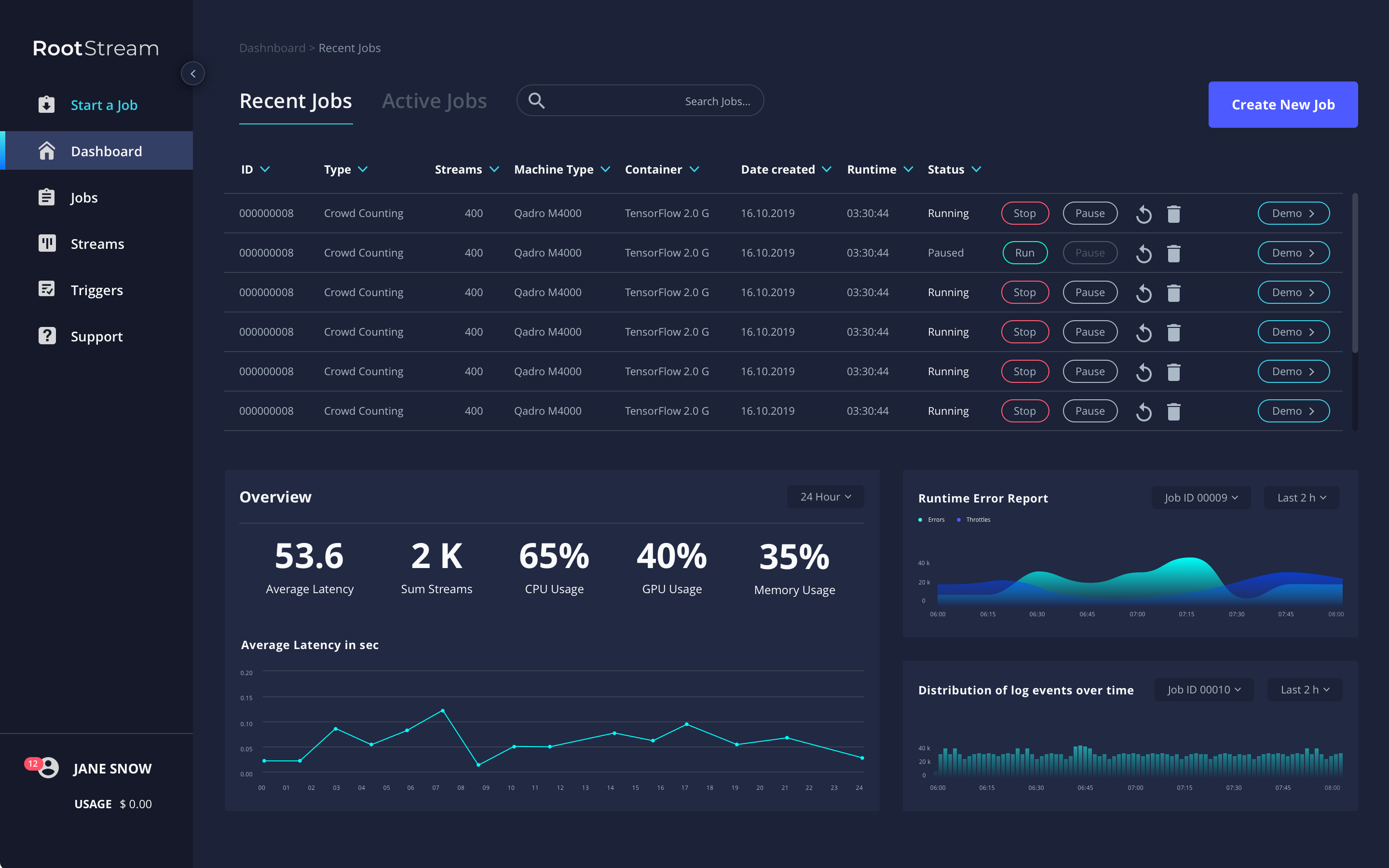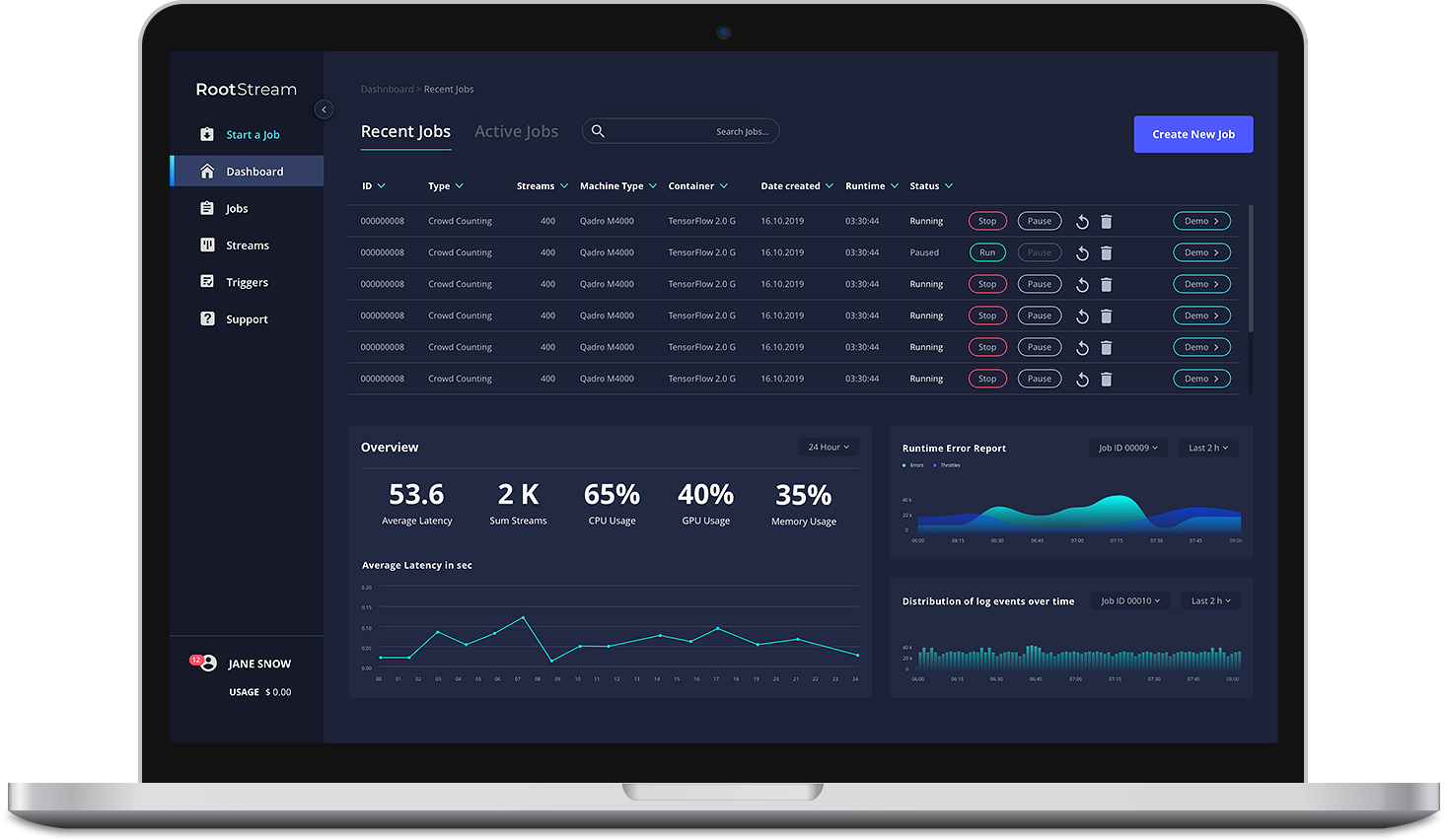
Rootstream's creators were frustrated by all the complexity and costs involved in streaming applications development and wanted to present to the market a platform that would improve this process through its easy-to-use web based API. RootStream is a WebRTC and Docker Cloud Video Processing platform. The platform makes it easy to securely stream any data from connected devices for analytics, AR cloud, machine learning (ML), and other processing heavy tasks to the cloud.
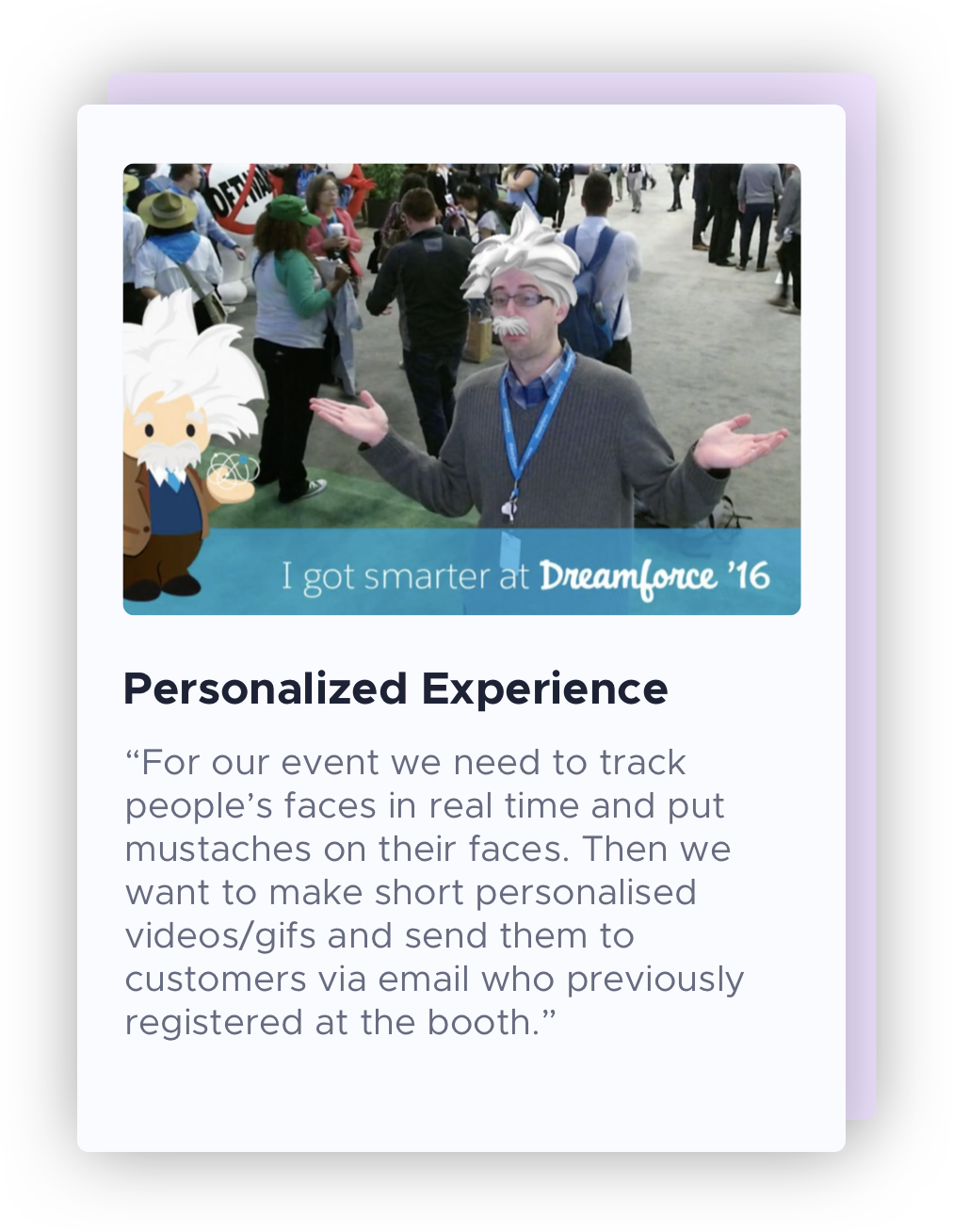
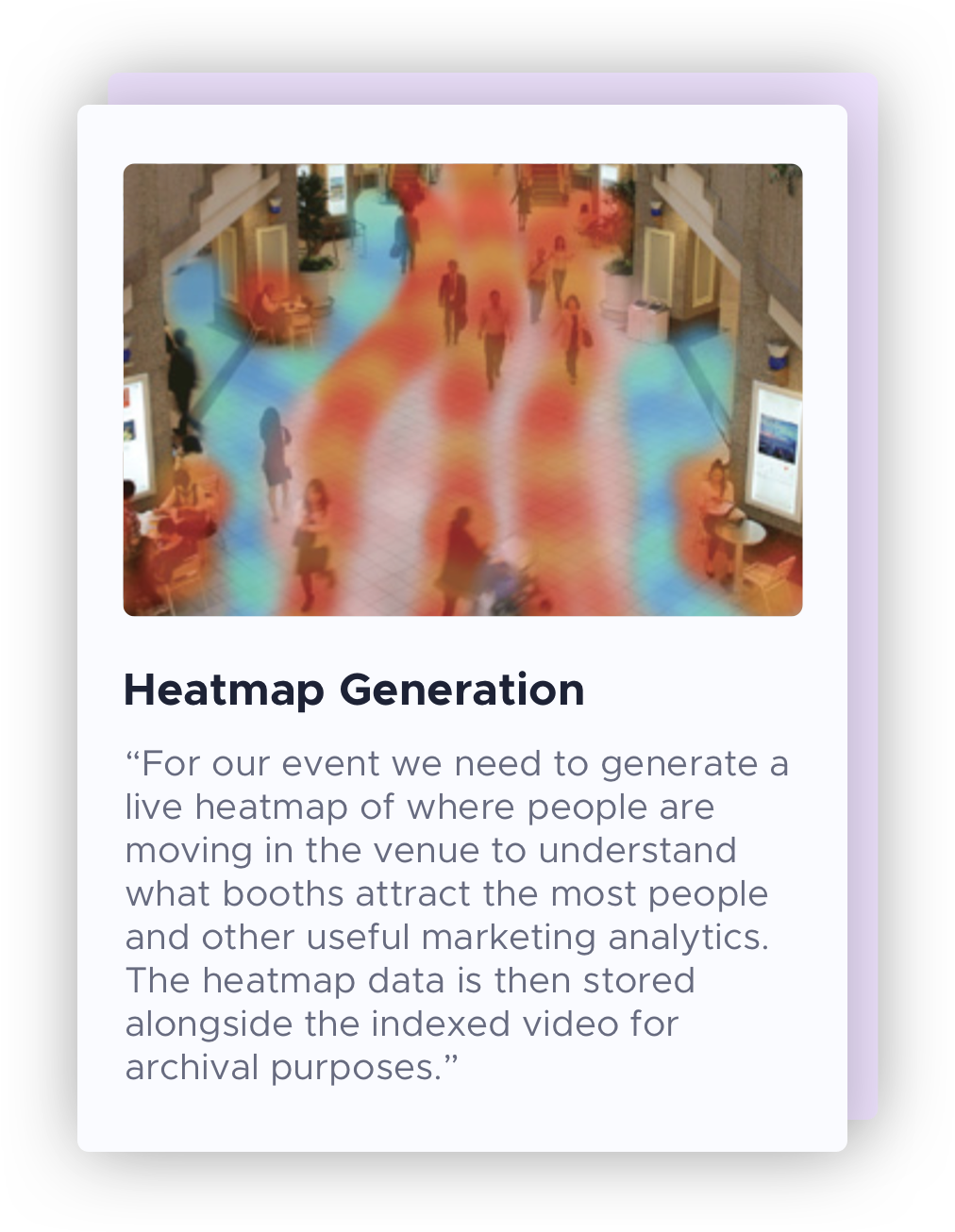
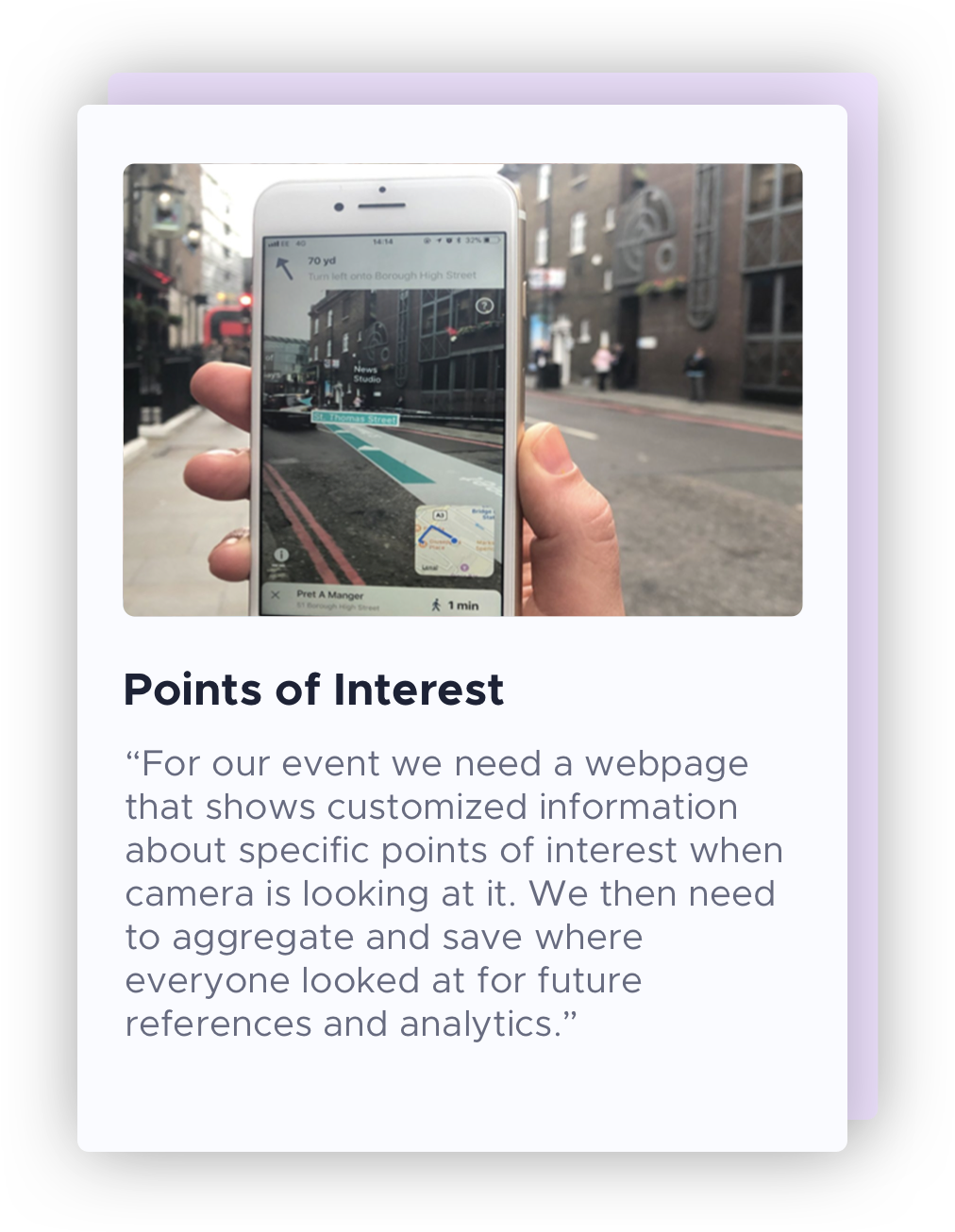
These are the short user persona types descriptions that I gathered from RootStream’s team to begin the research with: "Developer tier - mid-level web developer who, to this day, avoided video processing due to its complexity." And - "Enterprise tier - companies that run "events" and want to analyse streaming data (for instance a camera facing a booth full of people)".
∙Easily deploy processing intensive applications
∙Getting things done faster
∙Quickly build, train, and deploy machine learning (ML) models
∙Securely stream any data from connected devices
∙Staying productive and not wasting all my time on reading documentation
∙ Have control, and visibility into each step required to build, train, and deploy models
∙ Quickly develop a baseline model on which teams can further iterate
∙Frustrated by the complexity involved in streaming applications development
∙There are no integrated tools for the entire machine learning workflow
∙Tired of stitching together tools and workflows
∙Get to production faster
∙Lower production costs
∙Getting to production with less effort
∙Improve productivity
∙Compare results
∙Traditional ML development is expensive
∙Extensive production time
∙Hiring contractors
∙ Error-prone process due to the multiple elements involved
To promote a realistic and shared vision of the end user I proposed to RootStream's team that we could write the user stories collaboratively due to their expertise in the field. Thanks to their flexibility user stories are a good way to build a common language and a common mental model of what the project is about. User stories would help us to focus on goals that users will be able to work towards and not on pre-made features and abstract functionalities.
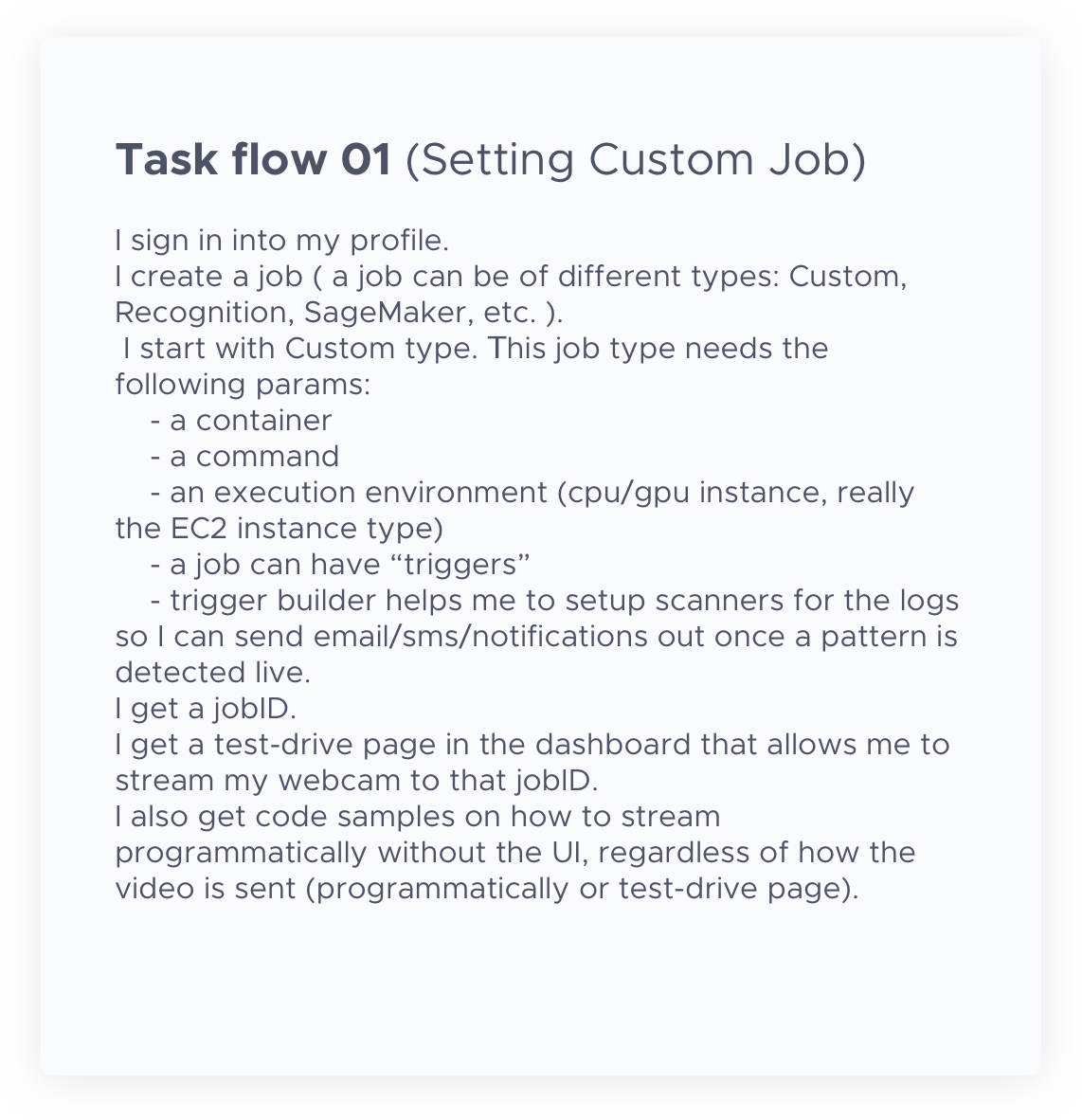
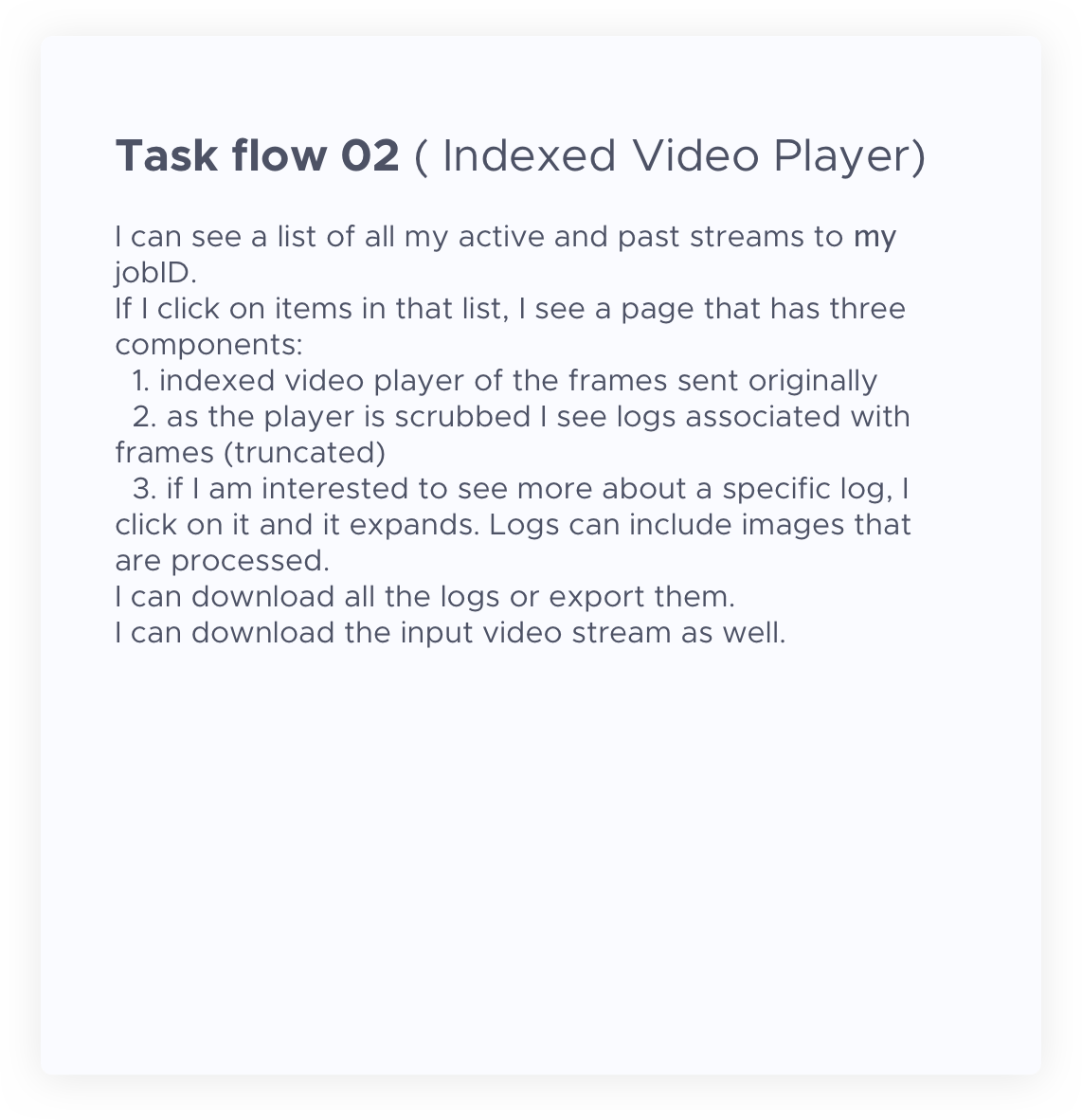
I set up a Moqups account where together with RootStream's Team we could work collaboratively on the structure, content and wireframes. The purpose of these sketches/ wireframes was not to set a pixel-perfect prototype, but to clarify important issues as quick as possible. Each member of the team (two RootStream members and myself) could contribute and make changes or suggest edits in real time.
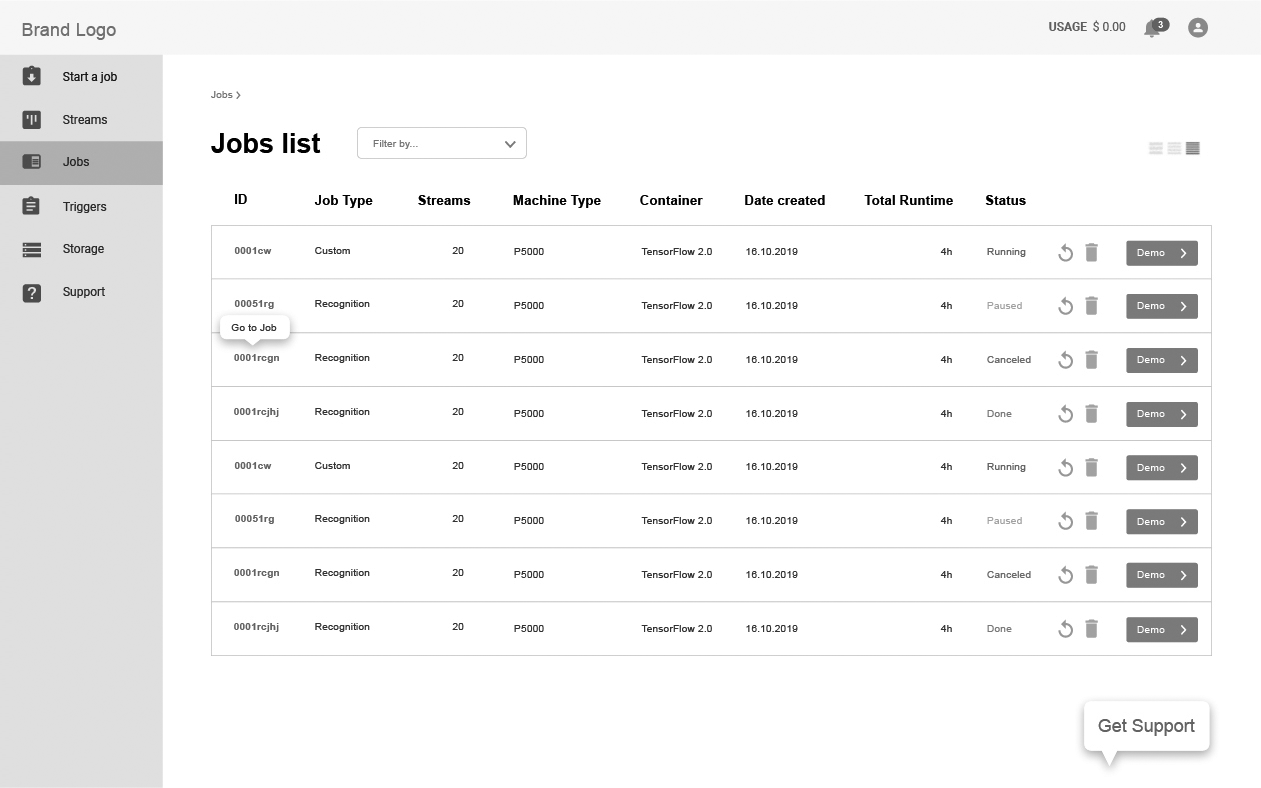
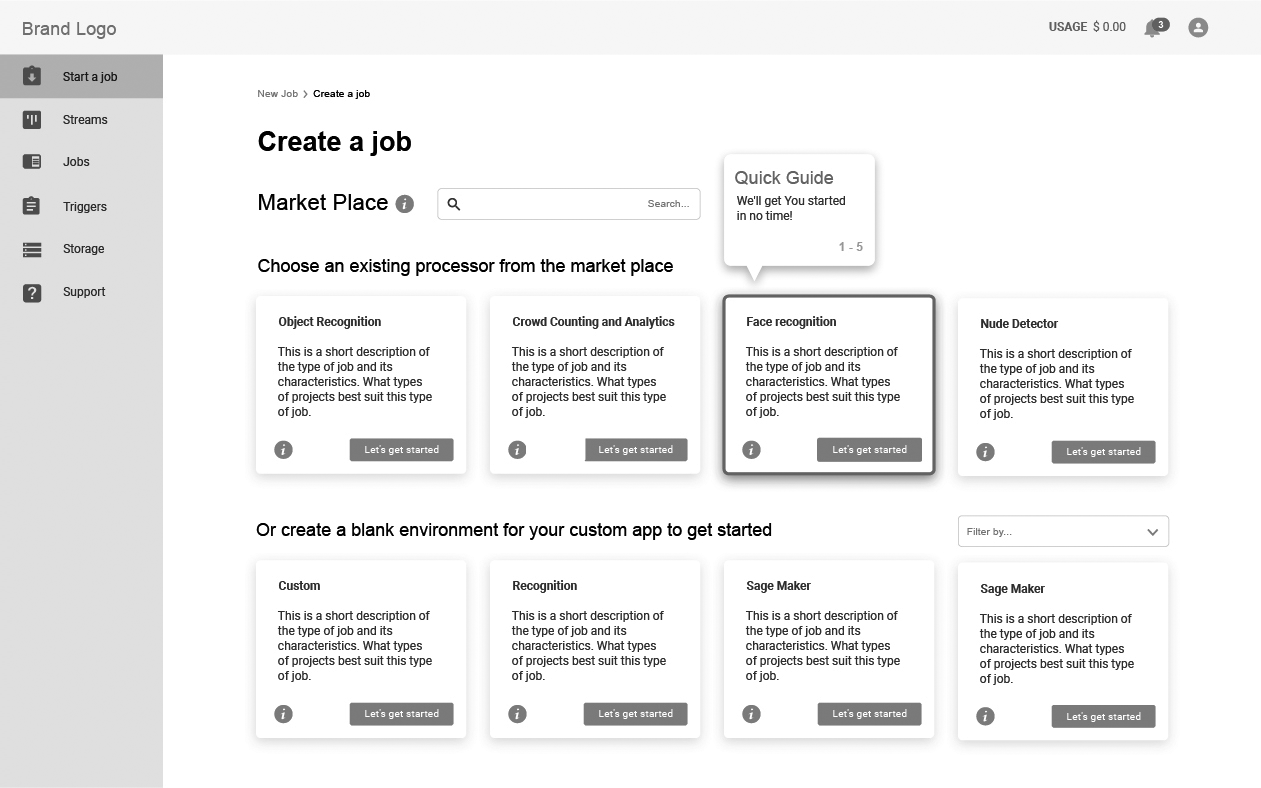
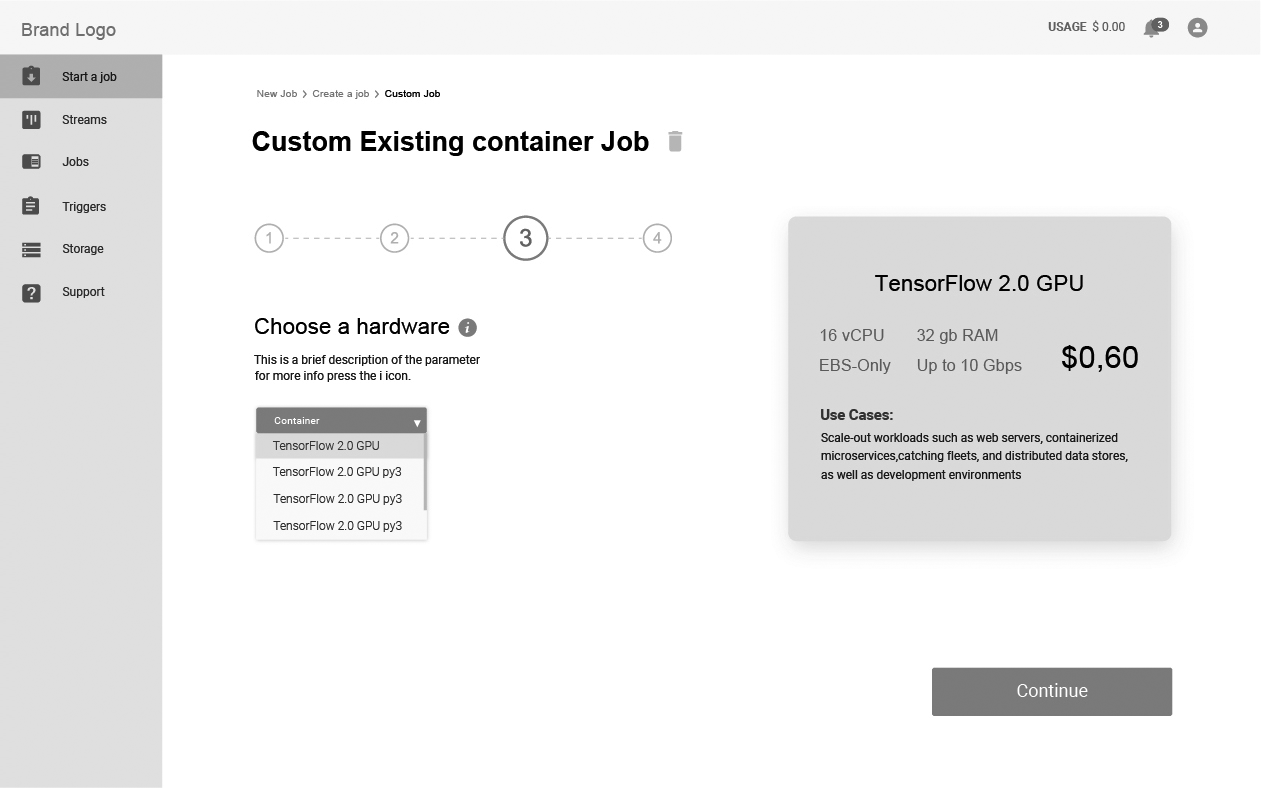
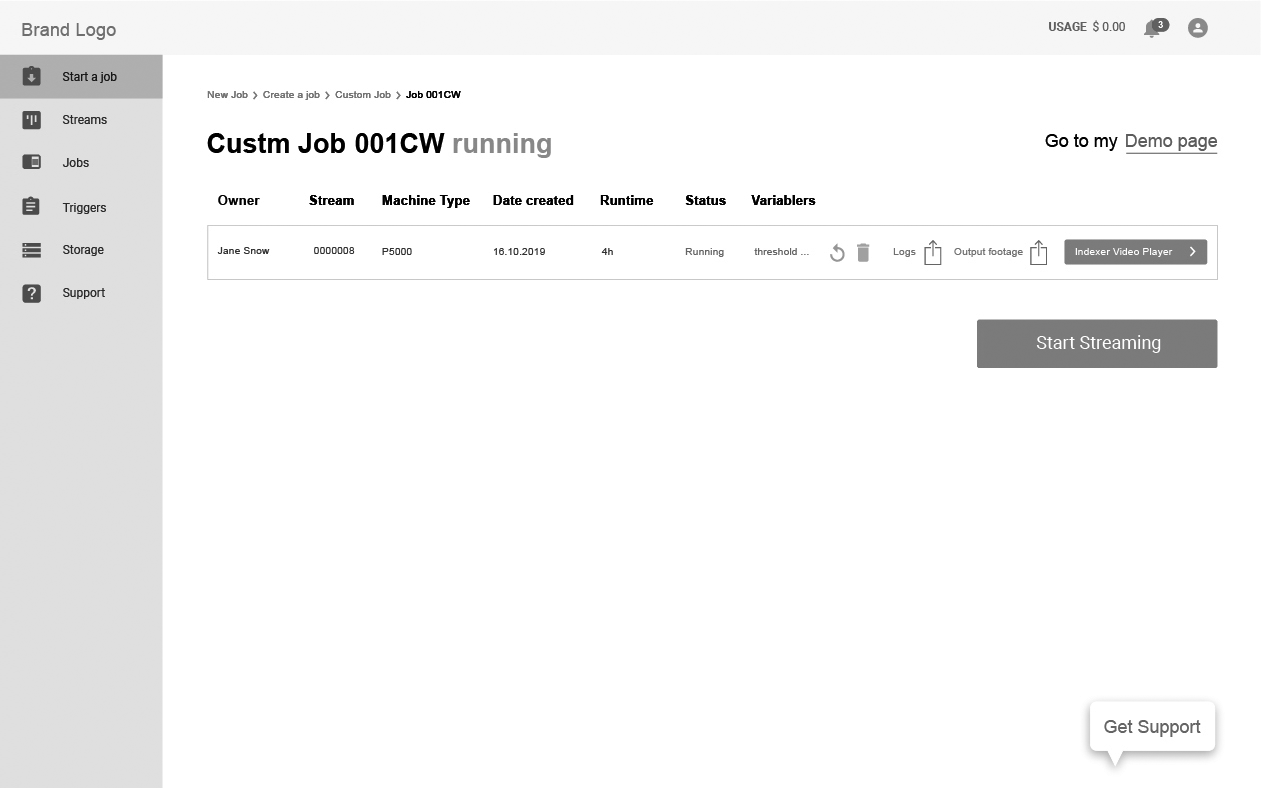
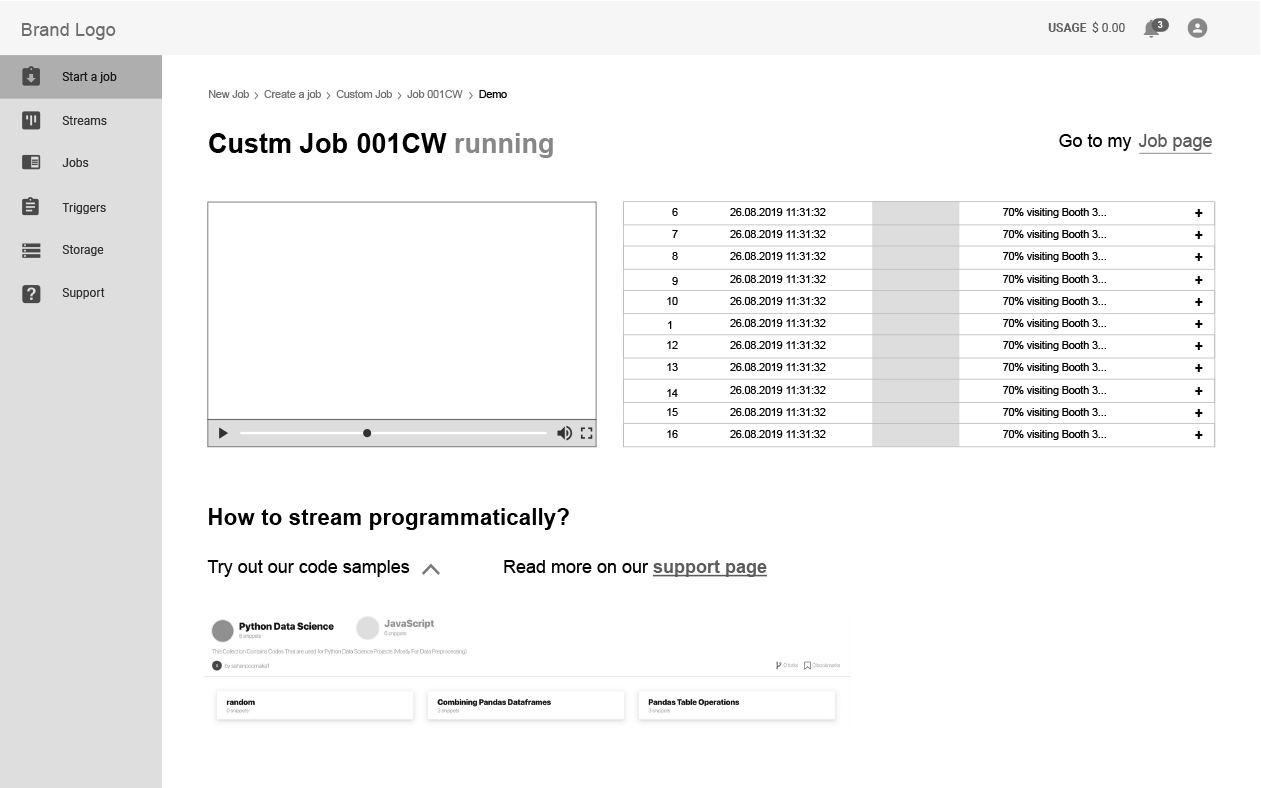
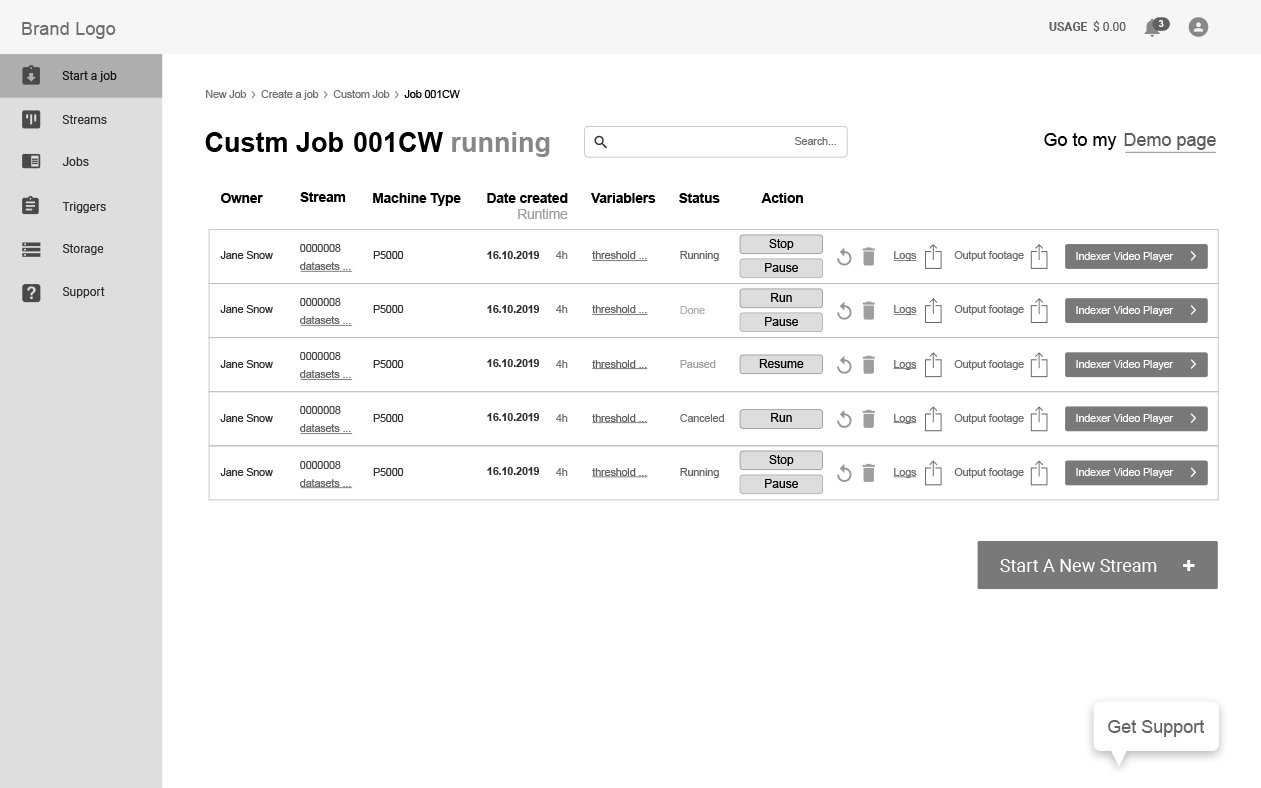
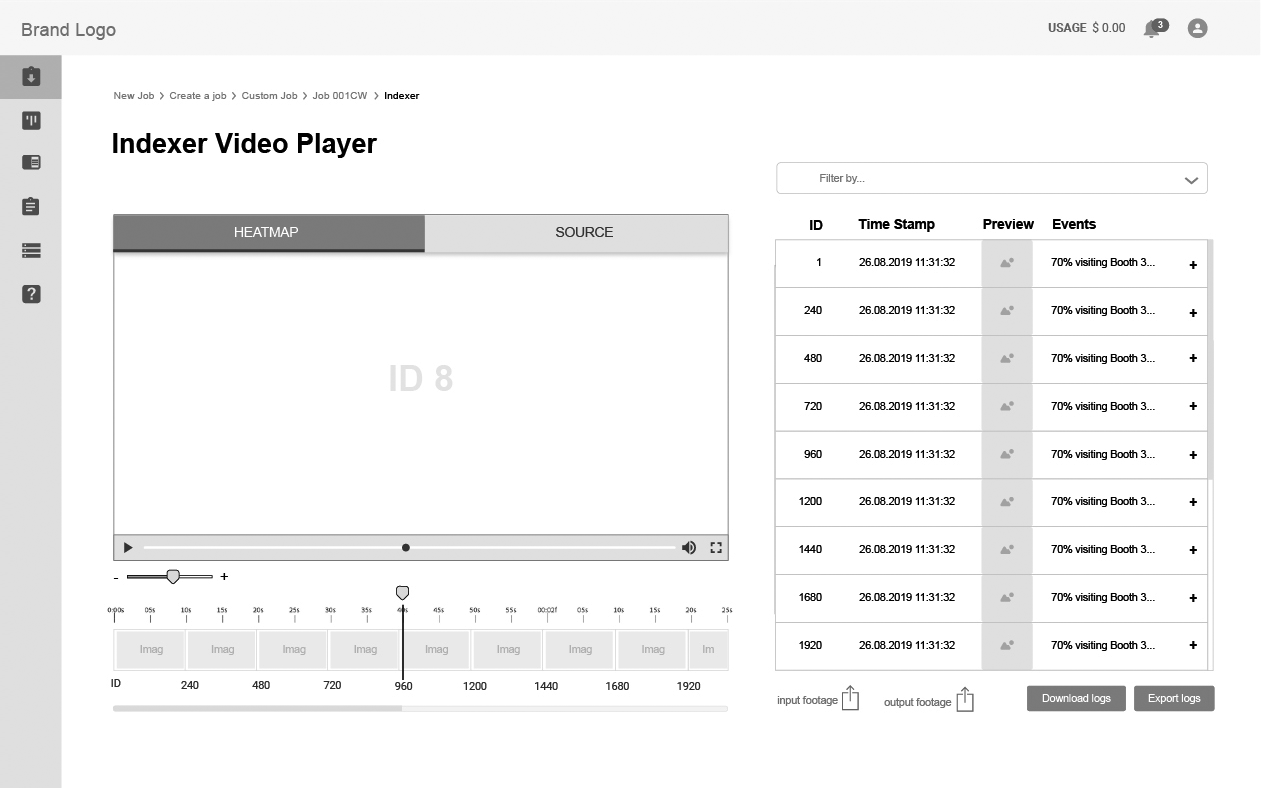
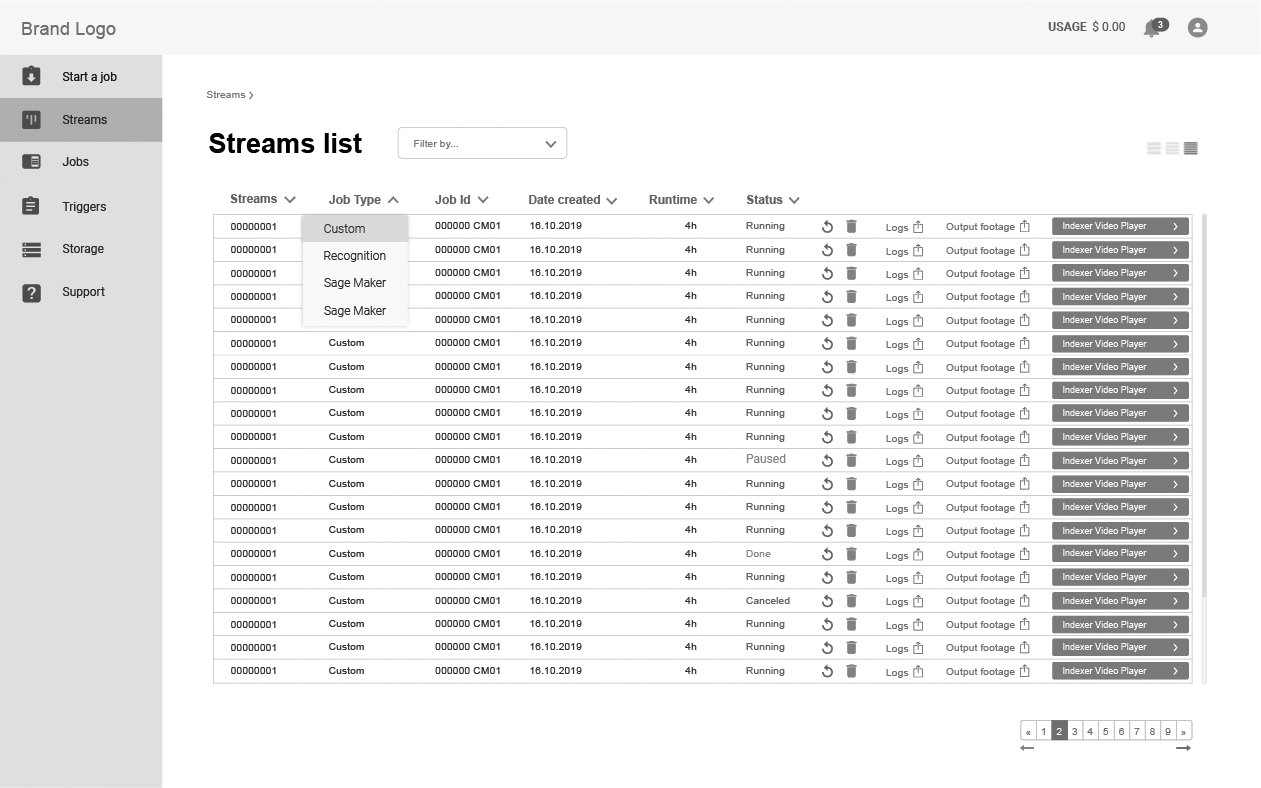
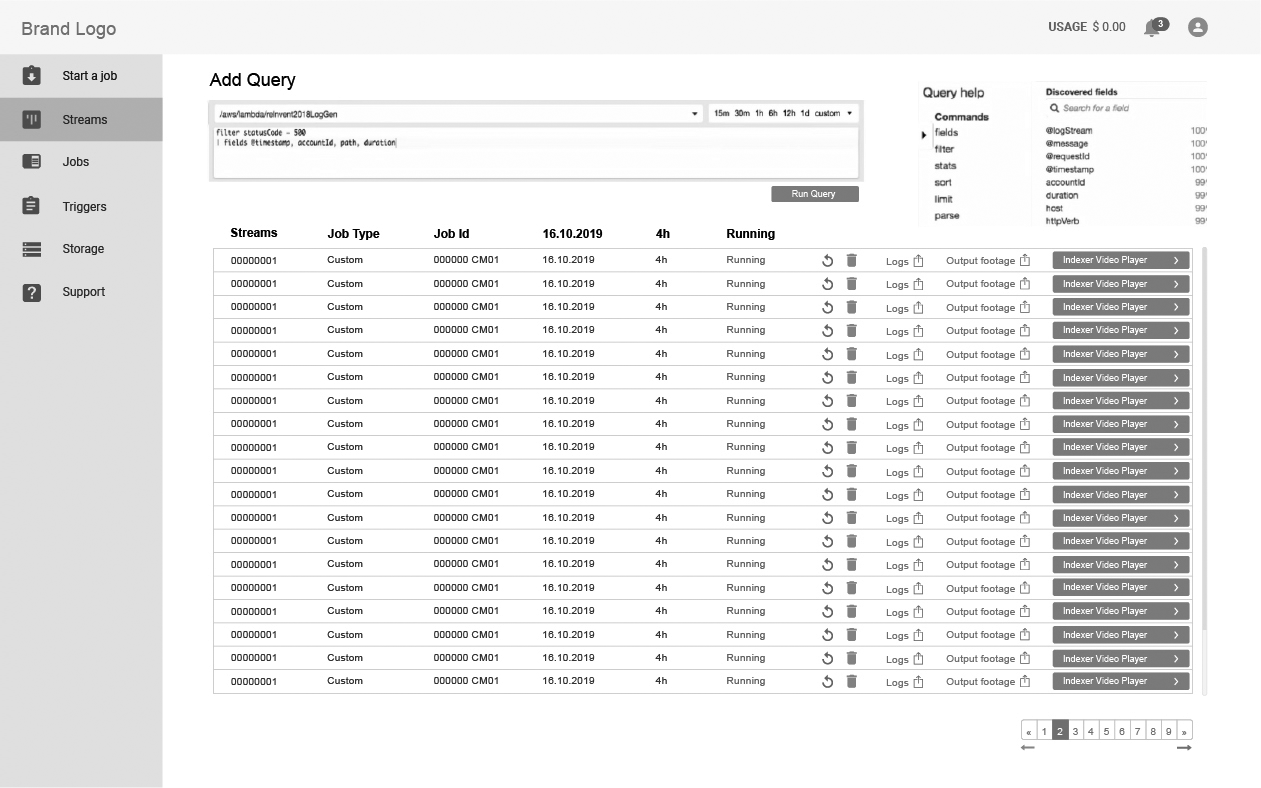
After finalising the wireframes ( I've also strongly advised the team to test them with actual users, since I could not recruit representatives of the target user group beforehand ) I created the prototype, including the ui and the visual design in Sketch. "Dark mode" was created predominantly to allow longer working hours for the users with less strain for the eyes.